A retail tub program is more than a container decision. The tub becomes part of the product display: it affects how the product is seen, how much value shoppers perceive, how much brand communication fits on the pack, and how easily a store can handle the item. That makes a defined pilot useful before scaling a new format across more stores or SKUs.
The goal is not to promise that one format will outperform every other format. It is to create a disciplined way to determine whether a specific tub, product, label, and placement work together for a particular retail program.
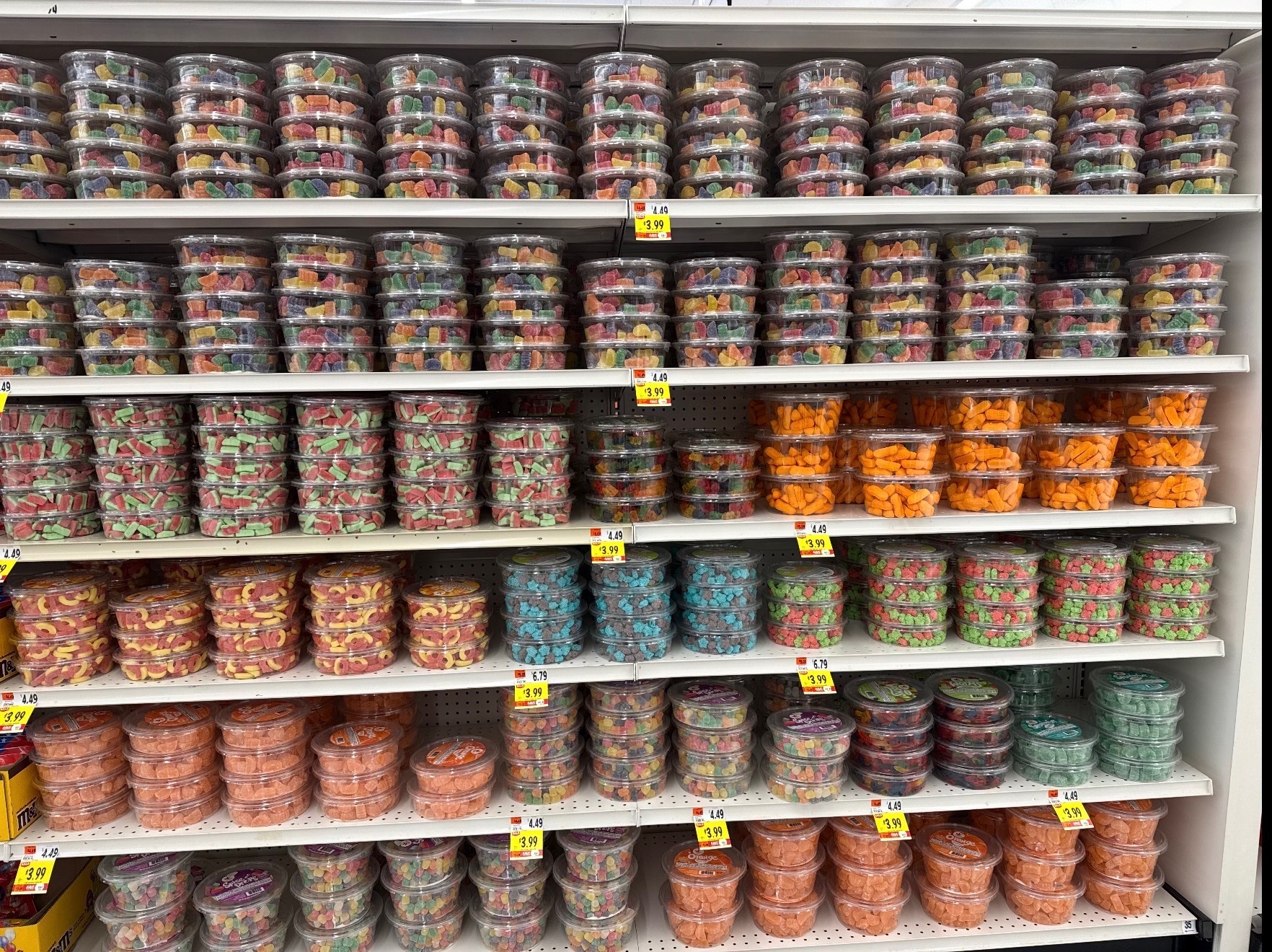
Why tubs can increase candy sales
Tub packaging can make candy easier to notice, easier to understand, and easier to buy in larger quantities. Clear tubs show the candy itself, stay upright on the shelf, provide more space for branding, and can create a family-size or sharing occasion that a small peg bag often cannot. In Liberty Trade Corporation's experience, selected product lines have achieved sales increases of up to 80% when the product, tub size, price point, design, and shelf placement work together. This is not a guaranteed result; it is a reason to test the full retail system.
A tub does more than hold candy. It becomes part of the display. The visible product, stable package shape, and larger communication area can improve impulse appeal and perceived value—particularly for colorful, durable candy.
| Sales driver | How the tub helps |
|---|---|
| Shelf visibility | A rigid, upright package can create a stronger visual block than flexible bags that slump or fold. |
| Product appeal | Clear walls or lids let colorful candy become part of the package design. |
| Perceived value | A larger multi-serve format makes quantity and value per ounce easier to understand. |
| Branding space | The front, back, sides, lid, and optional full-wrap label provide more room for selling messages. |
| New buying occasions | Tubs can support family sharing, parties, offices, pantry stocking, and seasonal use. |
| Retailer convenience | Uniform, freestanding packs can be easier to face, stack, count, and replenish. |
The tub becomes part of the display
In a clear tub, bright gummies, wrapped candies, jelly beans, sour candy, taffy, or seasonal mixes create visual impact before the shopper reads a single word. Clear packaging works best when the candy looks consistent and attractive. It should highlight color, shape, variety, and abundance—not excessive headspace, broken pieces, sugar dust, scuffing, or an uneven fill.
Fill level, product settling, piece size, tub diameter, and label coverage all influence the final shelf presentation. The packaging decision cannot be separated from product presentation: a transparent tub is powerful only when the visible product supports the value message.
More advertising space without buying more shelf media
A tub gives a brand more usable communication space than most flexible candy bags. The front can carry the product name, flavor, and main value proposition. The lid can act as a billboard on low shelves, countertops, endcaps, and pallet displays. Side and back panels can explain variety, serving occasions, ingredients, seasonal themes, or private-label positioning.
The best designs do not fill every surface with copy. They create a clear hierarchy: first the shopper sees the brand and candy type, then the value, flavor, or occasion. The package has more space, but the design still needs discipline.
Define what the test needs to answer
A useful pilot begins with a practical question—not a broad assumption. For example, a team may want to see whether a clear tub helps a product stand out in a seasonal display, whether the label has enough space to communicate flavor and value, or whether a different tub size is a better fit for a family-size offer.
Shelf presence
Can a shopper understand the product, flavor, and value at a glance?
Review the tub, label, and product visibility from the actual shelf distance—not only on a desk proof.
Placement fit
Does the tub have a specific display job in the program?
Evaluate it for the intended location, such as a checkout, endcap, seasonal display, or conventional aisle shelf.
Retail execution
Can the store receive, face, count, and replenish the format easily?
Confirm case configuration, label visibility, closure integrity, and how the format performs during normal handling.
Commercial signal
Does the test show enough demand to justify a broader program?
Compare agreed performance measures with the previous format or with the baseline that the retailer and brand set together.
Build a test that reflects the real shelf
Choose one focused retail question
Start with one testable question, such as whether a clear tub creates better visibility at checkout or whether a family-size format earns a place on a seasonal display.
Build a representative production sample
Use the intended product, tub size, label approach, closure, date coding, and case pack. A test only helps if the retail pack reflects the intended program.
Select a controlled placement
Use a defined number of locations or a clear display position so the team can distinguish a packaging result from a change in store execution.
Review results before expanding
Discuss shopper response, shelf condition, replenishment, product protection, and reorder signals before committing to a larger run.
Treat the tub as a complete retail pack
The product, tub, label, closure, coding, case pack, and placement all influence the retail result. A tub may give the brand more billboard space and visible product, but the benefit is reduced when the fill looks mismatched, the label is hard to read, or the closure does not hold up through handling.
Use tubs and bags for different retail jobs
A tub test does not need to be a decision to replace every bag. In many programs, the formats serve different shoppers and occasions. A small bag is usually an impulse, trial, or on-the-go purchase. A tub is more likely to be viewed as a pantry item, family pack, office snack, party purchase, giftable mix, or seasonal product. Testing the format in its intended retail job is more informative than treating the formats as interchangeable.
Liberty Trade has seen programs where the same candy was sold in both peg bags and tubs without observed cannibalization. The bag continued to serve the lower-priced impulse occasion, while the tub created a higher-value sharing or stock-up purchase. Every program should validate this with its own controlled retail test.
| Peg bag | Tub |
|---|---|
| Low-commitment trial or impulse purchase | Planned household, office, party, or sharing purchase |
| Lower ticket and smaller quantity | Higher ring with a stronger value-per-ounce message |
| Peg hook, checkout, or front-end placement | Shelf, endcap, countertop, seasonal display, or club stack |
| Limited front-facing communication space | Front, back, side, lid, and full-wrap branding opportunities |
| Best for individual or on-the-go use | Best for multi-serve, pantry, gifting, or group occasions |
Which candies work best in tubs?
Strong candidates are colorful, visually consistent, durable, and suitable for multi-serve use. Gummies, jelly beans, wrapped hard candy, caramels, taffy, retro mixes, sour candy, novelty pieces, and seasonal assortments often work well because the product itself contributes to shelf appeal.
Some products need more testing. Sour belts may stick or shed sugar. Lollipops and irregular novelty items can create awkward empty space or lid interference. Chocolate-coated candy may require tighter temperature, scuffing, light-exposure, and barrier control. Fragile premium truffles are often better protected and presented in a tray or gift box. Choose a tub when the product looks better in volume, remains presentable during distribution, and supports a sharing or value-oriented purchase.
Why retailers ask for tubs
Tubs remain upright, are easier to face, create a cleaner shelf block, and provide a larger area for price, flavor, quantity, and brand communication. Their uniform shape can help store teams count and replenish products, while rigid sidewalls can reduce crushing after handling. Stackability and shelf efficiency should still be tested with the filled package—not assumed from an empty sample.
Match placement to tub size
Small tubs can work near checkout or on countertops when the price point is easy to understand. Mid-size tubs usually fit grocery shelves, endcaps, and seasonal displays. Large tubs are more natural in club stores, bulk aisles, pallet programs, and family-value sections. For e-commerce, also validate front, side, lid, and scale images, secure closure, parcel-tested shippers, and dimensional shipping cost.
Common mistakes that reduce the sales opportunity
Choosing the tub before the retail brief
Start with the shopper, channel, target retail price, and purchase occasion. Then select tub size, fill weight, closure, label, case pack, and pallet pattern.
Ignoring the visible fill
Excessive headspace can make a correctly weighted tub look like poor value. Overfilling can interfere with the lid, seal, or closing process.
Underusing the package
A brand can lose the format’s advantage by hiding attractive candy behind oversized opaque labels or failing to use the lid and side panels strategically.
Assuming the pack will survive distribution
Closure and tamper-evident choices must match the product and channel. A loose lid can undermine confidence, cause leakage, and lead to returns.
When tub packaging is not the right choice
Tub packaging is not automatically better than a bag or box. It can be a weaker choice when the target price cannot support the container, when the product needs a barrier the selected tub cannot provide, or when the SKU does not sell fast enough to justify a wide shelf footprint. It may also be wrong for fragile premium candy, inconsistent-looking products, or items with high parcel-shipping cube. In those situations, a peg bag, stand-up pouch, flow-wrap, carton, or compartmented gift box may be the better commercial solution.
How to test the opportunity before a full rollout
Keep the candy and flavor consistent, retain the existing bag where possible, and add the proposed tub in matched stores or comparable retail locations. Track units and dollar sales per store per week, gross margin, category sales, out-of-stocks, display compliance, returns, and reorders.
Test different placements separately when possible, because an endcap can lift sales even when the package itself is not the main reason. The test should determine whether the tub adds a new buying occasion or only shifts volume from another format. A successful program should improve total category performance, not merely move the same demand into a different container.
Plan a tub test around your retail objective
Liberty Trade can help align the packaging format, label application, coding, case packing, and retail-ready requirements for a focused candy tub program.
Discuss Your Tub Program